A floor that got wet can often be saved if the water is stopped and the floor is dried before anyone decides what to tear out. We repair and replace water-damaged floors in St. Joseph homes and rentals. We are not an emergency water extraction service, so if water is still standing or still coming in, deal with that first.
First steps after a leak
- Stop the water. Turn off the valve to the fixture or the main valve to the house.
- Photograph the source, the wet area and the floor before anything gets moved.
- Get standing water up with towels or a wet vacuum, and move rugs and furniture off the wet area.
- Call your insurer if the damage may be covered, before any flooring is removed.
- Get air moving with fans and, if you have one, a dehumidifier.
How each floor type reacts to water
- Solid hardwood soaks up water and swells. Boards cup, with edges higher than the centers, or crown in the middle. Badly soaked floors buckle and lift off the subfloor.
- Laminate has a wood-fiber core. Once water gets into the edges, the core swells and does not shrink back. Swollen laminate planks are replaced, not dried.
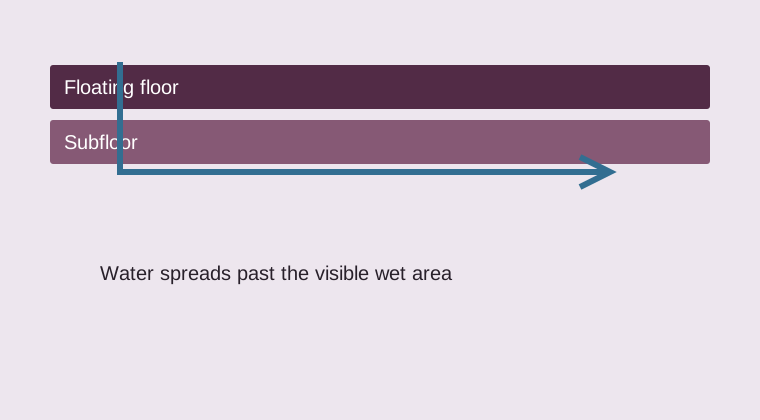
- Vinyl plank shrugs off water on top, but water runs through the seams and sits underneath, where it can damage the subfloor and grow mold out of sight.
- Tile is not hurt by water, but the grout, the setting bed and the subfloor under it can be.
- Carpet and pad can sometimes be dried if the water was clean and it was dealt with quickly. Pad that sat wet is usually replaced.
Dry first, decide second
Wet wood looks worse than it will look once it is dry. Hardwood that cupped right after a leak can flatten a lot as it dries out, and pulling it up too early throws away boards that would have recovered. On the other hand, leaving a wet floor down too long lets the subfloor rot and mold start. The right timing depends on how wet the floor got, for how long, and what is underneath. The written instructions from your floor's maker set how dry the floor and subfloor need to be before repair or sanding.
What can be saved
- Hardwood that cupped and then flattened as it dried can often stay, with a few boards replaced where it split or stained.
- Vinyl plank can often be taken up, the area under it dried and the same planks clicked back down.
- Tile usually stays, unless the subfloor below it went soft.
- Laminate that swelled and pad that stayed wet are usually replaced.
The subfloor after a leak
The subfloor decides whether a water repair lasts. If it stayed wet long enough to soften or rot, it has to be cut out and replaced before any finished floor goes back. See subfloor repair for how that works, and floor repair for the plank and board work that often follows.
Mold
If we open a floor and find mold, we stop and tell you, and point you to a mold specialist before floor work goes on.
Sewer and drain backups are a different cleanup
Water from a supply line or a water heater is clean water. Water that came up from a floor drain, a toilet or a sewer line is contaminated, and the cleanup, what can be saved and how the space is cleaned are all different. Soaked porous materials like carpet and pad are generally thrown away after a backup. If your basement took water from a drain, have it cleaned properly before anyone talks about new flooring. Our guide to basement floors and water covers what to put down after.
Insurance claims
With a claim open, the adjuster decides what the policy covers. We can give you a written quote for the floor repair that you can share with your insurer. We cannot tell you what your policy will pay.
What water damage repair costs
Angi puts floor water damage repair at $200 to $6,300 (Angi). The bottom of that range is a few planks over a subfloor that stayed sound. The top is a whole room of flooring and subfloor. See the full breakdown and estimate tool in our floor repair and replacement cost guide, or go back to the St. Joe Flooring home page.
Water damage questions
Will cupped hardwood settle flat again?
Often, once the floor and the subfloor have fully dried out. Cupping that remains after drying can sometimes be sanded flat, and boards that split or buckled get replaced. Sanding a floor that is still damp causes new problems, so it waits.
Can only the wet section be replaced?
Usually, yes. On tile and glue-down floors the damaged section can be cut out on its own. On a floating floor the planks come up from the nearest wall to the wet area, and the dry planks go back down.
How soon after a leak can the floor be fixed?
After the source is fixed and the floor and subfloor are dry. That can be a matter of days for a small leak caught quickly, and longer for a soaked floor or a wet basement. Rushing the repair while the subfloor is still wet is a common reason floors fail again.
Sources
- Angi, cost to repair flooring